Image 2021 -Rock-plant interactions driving early soil development and landscape evolution The interaction between abiotic and biological processes is crucial to understand the development of life on Earth and the ecosystem services. Natural highly heterogeneous landscapes that support life develop through biological and abiotic processes at the interface of atmosphere, hydrosphere, and lithosphere. Despite their importance to natural ecosystems and humanity, we still lack good understanding of the mechanisms of landscape formation. Read more Image Beyond the mean: plant functional diversity and the maintenance of rare phenotypes in plant communities Analyzing the drivers of the vulnerability of species and ecosystems to environmental changes is critical. Functional trait ecology has brought standardized protocols to analyze the response of numerous species on a physiological basis simultaneously. However, it lacks a theoretical corpus, which impedes a deep exploration of the underlying mechanisms and limits predictions. Rooted on adaptive dynamics theory, we will focus on the dynamics of local physiological optima and community-level trait distributions (TD) around them and provide theoretical expectations. Read more Image Chance constrained games for energy management under uncertainty We focus on applied problems where it is necessary to make optimal decisions in the presence of risk and uncertainty together with dependence between the random events, where the source of uncertainty is twofold. One component of uncertainty is exogenous and results from substantially incomplete knowledge of important dependent problem data, like demand for goods and services, weather conditions, prices for commodities, high-impact technical failures, and other disruptions occurring with low probability. Read more Image Heat tOlerant TOmato Pollen in Cultivars (HOtTOPIC) Seed and fruit crops both depend on pollination, a process highly sensitive to heat. At elevated temperatures, pollen tubes fail to grow through the female pistil tissues and deliver sperm cells in ovules for fertilization and seed formation. An increase in average worldwide temperatures will thus undermine crop productivity. In this proposal, we propose to study LARP6C protein in tomato, previously identified by the CNRS team, using many state-of-the-art procedures to understand its potential roles in pollen tube growth under permissible and HS temperatures Read more Image Investigation of atmoSpheric cloud-Particle Interactions with cross-disciplinary student Research Experiences Climate change is an important component of several concurrent global environmental changes that also affect human health – often interactively. The Intergovernmental Panel on Climate Change report underscores that our understanding of the links between climate, climate change, and human health has increased considerably in recent decades. However, there are still many gaps in knowledge about likely future patterns of exposure to climatic-environmental changes, and about the vulnerability and adaptability of physical, ecological, and social systems to such climate change. Read more Image Landscape wonder: a springboard towards an environmental transition? We assume that the sense of wonder linked to the aesthetics of landscapes is a first step towards enhancing respect for the environment: 1) The aesthetic component of landscapes leads to an increased environmental awareness that modifies behavior, and attachment to iconic landscapes can transform certain ecological "dictates" into environmental benevolence. 2) In the face of the anthropogenic landscape change and the current environmental crisis, cultural diversity and multiple ways of seeing and interacting with the world can be mutually enriched by their complementary ontological approaches and contribute to the common goal of preserving the environment. Read more Image Mediterranean wildfires: historical environmental drivers and ecological consequences (MedFires) MedFires is an interdisciplinary project focusing on fire in the Mediterranean Basin. It hypothesizes that naturally fire-prone black pine forest socio-ecosystems (BP-SES) can be sustainable under low-intensity fire regimes but can be profoundly altered under fire suppression or high intensity fires. Read more Image Model Development for Mitigation of Arid Landscape Transformation: Collaborative development of eco-hydrologic model and analysis across the Sonoran Desert and Sahelian West Africa Arid landscape transformation is a pressing global challenge; warmer temperatures and changing precipitation regimes are expected to decrease water supply in many arid locations that are already water limited. This may result in the expansion of arid landscapes and ecosystem changes in existing arid landscapes. Arid and semi‐arid lands cover nearly half the planet - Rapid warming and shifting precipitation regimes threaten already fragile and water limited ecosystems. Read more Image One person’s trash is another person’s treasure – optimizing metal-contaminated plant biomass towards the needs of Green Chemistry There is rsing concern related to human exposure to toxic metals by inhalation and ingestion of aerosolized particulates in arid regions of the world. Read more Image Translational regulations in male fertilization in Arabidopsis thaliana and tomato Reproduction in angiosperms is crucial for seed and fruit production. The mature pollen grain (MPG) germinates and transports two sperm cells into the pistil in a pollen tube, where guided by various signals, it will discharge them into the ovule for fertilization and form the seed. Read more
Image 2021 -Rock-plant interactions driving early soil development and landscape evolution The interaction between abiotic and biological processes is crucial to understand the development of life on Earth and the ecosystem services. Natural highly heterogeneous landscapes that support life develop through biological and abiotic processes at the interface of atmosphere, hydrosphere, and lithosphere. Despite their importance to natural ecosystems and humanity, we still lack good understanding of the mechanisms of landscape formation. Read more
Image Beyond the mean: plant functional diversity and the maintenance of rare phenotypes in plant communities Analyzing the drivers of the vulnerability of species and ecosystems to environmental changes is critical. Functional trait ecology has brought standardized protocols to analyze the response of numerous species on a physiological basis simultaneously. However, it lacks a theoretical corpus, which impedes a deep exploration of the underlying mechanisms and limits predictions. Rooted on adaptive dynamics theory, we will focus on the dynamics of local physiological optima and community-level trait distributions (TD) around them and provide theoretical expectations. Read more
Image Chance constrained games for energy management under uncertainty We focus on applied problems where it is necessary to make optimal decisions in the presence of risk and uncertainty together with dependence between the random events, where the source of uncertainty is twofold. One component of uncertainty is exogenous and results from substantially incomplete knowledge of important dependent problem data, like demand for goods and services, weather conditions, prices for commodities, high-impact technical failures, and other disruptions occurring with low probability. Read more
Image Heat tOlerant TOmato Pollen in Cultivars (HOtTOPIC) Seed and fruit crops both depend on pollination, a process highly sensitive to heat. At elevated temperatures, pollen tubes fail to grow through the female pistil tissues and deliver sperm cells in ovules for fertilization and seed formation. An increase in average worldwide temperatures will thus undermine crop productivity. In this proposal, we propose to study LARP6C protein in tomato, previously identified by the CNRS team, using many state-of-the-art procedures to understand its potential roles in pollen tube growth under permissible and HS temperatures Read more
Image Investigation of atmoSpheric cloud-Particle Interactions with cross-disciplinary student Research Experiences Climate change is an important component of several concurrent global environmental changes that also affect human health – often interactively. The Intergovernmental Panel on Climate Change report underscores that our understanding of the links between climate, climate change, and human health has increased considerably in recent decades. However, there are still many gaps in knowledge about likely future patterns of exposure to climatic-environmental changes, and about the vulnerability and adaptability of physical, ecological, and social systems to such climate change. Read more
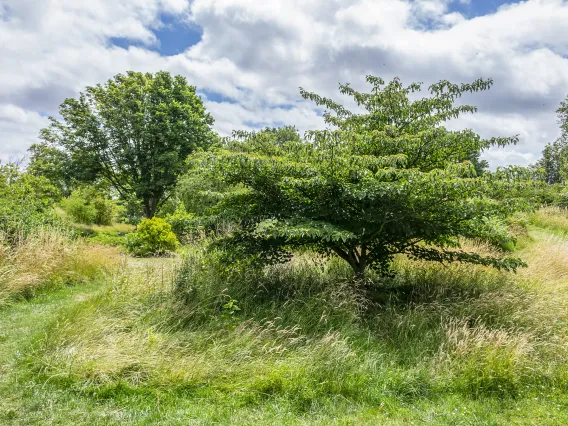
Image Landscape wonder: a springboard towards an environmental transition? We assume that the sense of wonder linked to the aesthetics of landscapes is a first step towards enhancing respect for the environment: 1) The aesthetic component of landscapes leads to an increased environmental awareness that modifies behavior, and attachment to iconic landscapes can transform certain ecological "dictates" into environmental benevolence. 2) In the face of the anthropogenic landscape change and the current environmental crisis, cultural diversity and multiple ways of seeing and interacting with the world can be mutually enriched by their complementary ontological approaches and contribute to the common goal of preserving the environment. Read more
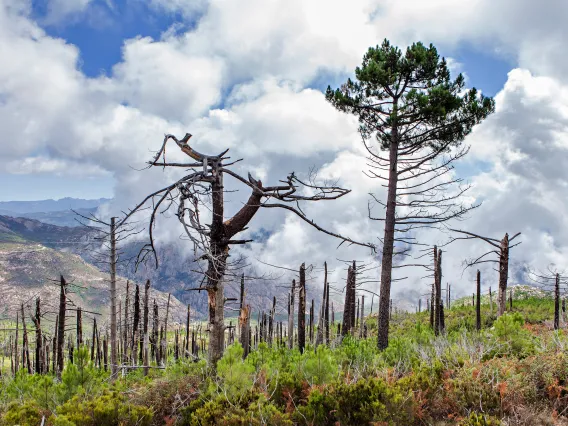
Image Mediterranean wildfires: historical environmental drivers and ecological consequences (MedFires) MedFires is an interdisciplinary project focusing on fire in the Mediterranean Basin. It hypothesizes that naturally fire-prone black pine forest socio-ecosystems (BP-SES) can be sustainable under low-intensity fire regimes but can be profoundly altered under fire suppression or high intensity fires. Read more
Image Model Development for Mitigation of Arid Landscape Transformation: Collaborative development of eco-hydrologic model and analysis across the Sonoran Desert and Sahelian West Africa Arid landscape transformation is a pressing global challenge; warmer temperatures and changing precipitation regimes are expected to decrease water supply in many arid locations that are already water limited. This may result in the expansion of arid landscapes and ecosystem changes in existing arid landscapes. Arid and semi‐arid lands cover nearly half the planet - Rapid warming and shifting precipitation regimes threaten already fragile and water limited ecosystems. Read more
Image One person’s trash is another person’s treasure – optimizing metal-contaminated plant biomass towards the needs of Green Chemistry There is rsing concern related to human exposure to toxic metals by inhalation and ingestion of aerosolized particulates in arid regions of the world. Read more
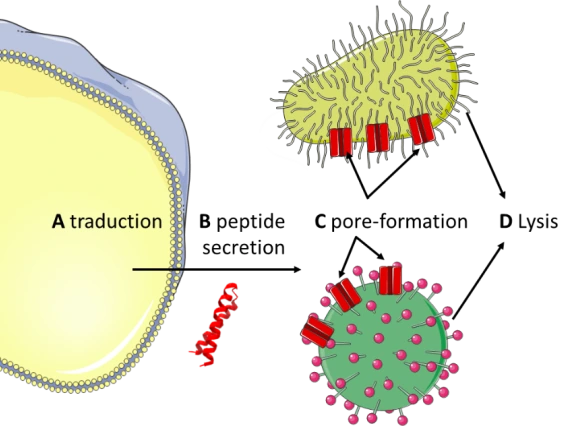
Image Translational regulations in male fertilization in Arabidopsis thaliana and tomato Reproduction in angiosperms is crucial for seed and fruit production. The mature pollen grain (MPG) germinates and transports two sperm cells into the pistil in a pollen tube, where guided by various signals, it will discharge them into the ovule for fertilization and form the seed. Read more